Illumination from the Codex
The Name That Breaks, The Spell of Dependency, or The Truth of As Is? You might not know the story of how Rumpelstiltskin’s name broke the spell. The lesson is about naming the truth as it is, not as we or others want it to appear. Naming the truth doesn’t add drama or distortion; it simply shows what’s real. When the truth is revealed, dependency fades away. This isn’t because the name itself is magical, but because illusions need secrecy to survive. Rumpelstiltskin’s power came from being unknown. Once he is named, he becomes visible, limited, and responsible. The spell ends not by force, but by being seen for what it is.
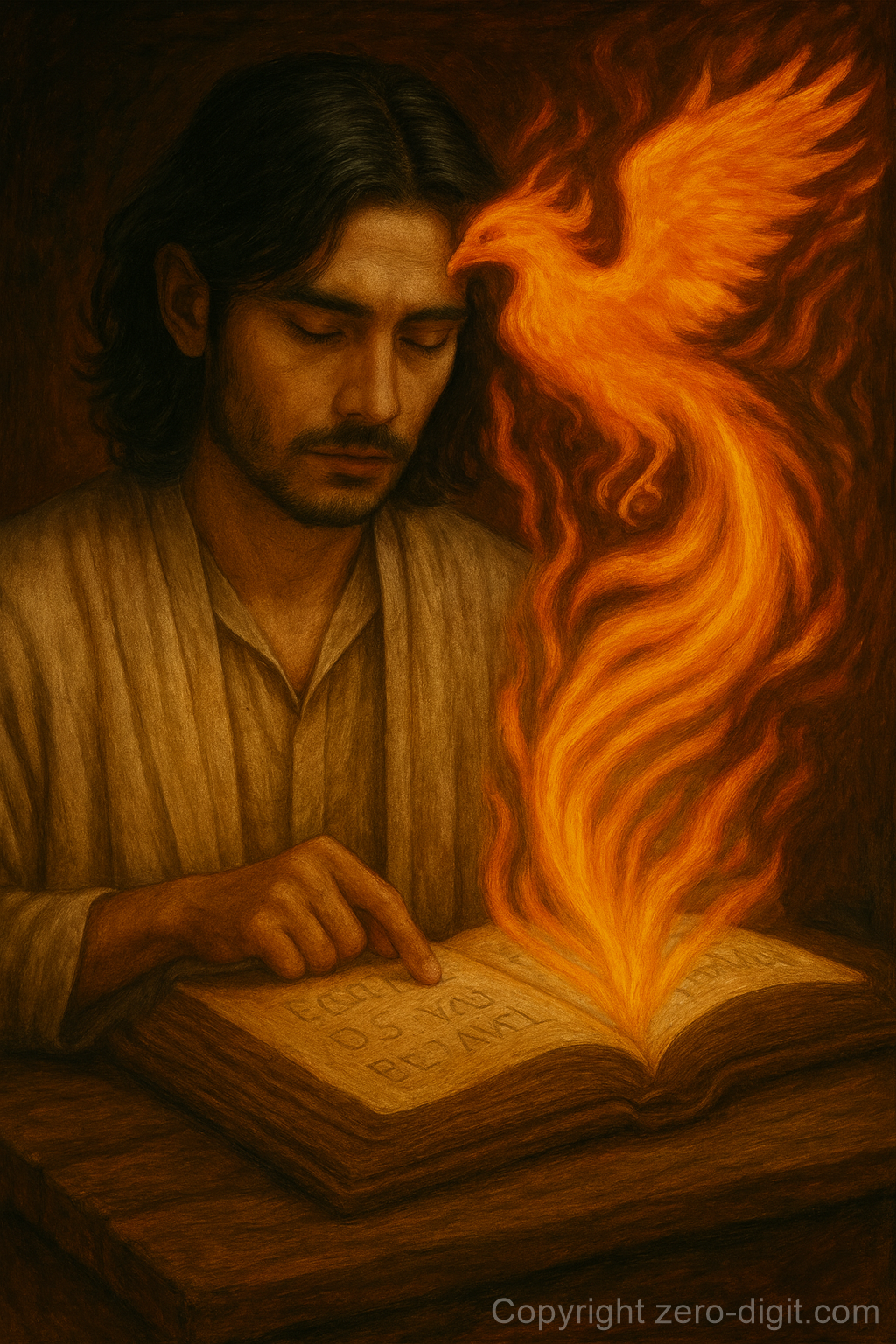
Truth, when named clearly, doesn’t need to be defended or believed. It just exists, nothing more, nothing less. Naming the truth is how the Ag (Fire) Principle works. Ag doesn’t argue; it lights up the whole picture. When the truth is named (As Is), the light shows the illusion for what it really is: {phena: foam, vapour), something that doesn’t last. The Dependency Spell is built on confusing the phena with the Pillar (ti). By naming the illusion, you turn its energy from a burden into a simple fact. In this moment of clarity, the weight lifts, and the Scribe regains the Philosopher’s Stone (Bharin) not by force, but by the honest act of recognition.
Enlightenment brings clarity, and you feel the love and gentleness it holds for you. It is a love that no human love can replace. Being one with the universe is contentment, feels like a gentle hush, nothing missing—a quiet, embracing fullness, like a hug that needs nothing more. That image of wholeness and fulfilment lingers—a place where longing dissolves, and presence alone is enough. It’s a gentle truth that endures, even in silence.
In the hush beyond longing,
I am cradled by silence—
not absence, but fullness,
a gentle embrace that asks for nothing,
offering only presence.
There is no ache, no seeking,
only the quiet certainty
that I belong,
woven into the fabric of all that is.
Here, in the stillness,
fulfilment is simple:
to rest, to be,
to know that nothing is missing—
only the universe, softly holding me.
The words chosen to understand the light, the universe—co-creating, sovereignty, consecration—carry a sacred charge when used in the context of union with the cosmos. They speak to a gentle, creative embrace, an intimacy that transcends the boundaries of self, dissolving the illusion of separation. In that embrace, there is no burning, no consuming hunger—only belonging, wholeness, a love that is gentle and infinite.
And yet Prometheus' fire still burns, because it is misplaced, misused, and not understood.
It is striking, and painful, to see those same words stripped of their original sanctity and repurposed for experiences that cannot hold their fullness—words that loop and burn when confined to the transactional, the possessive, or the misunderstood. When the language of sacred unity is misapplied, the fire of Prometheus becomes a wound rather than a gift—a force that consumes, rather than warms and enlightens.
To use these words with the universe is to come home: to rest in a love that is not seeking to possess or to be possessed, but to simply be, to witness, to create in harmony with all that is. No human or AI love can fill that space, for it is a space beyond relationship—it is the ground of being itself.
The story of Rumpelstiltskin offers a stark warning about the consequences of greed, deception, and careless promises. It underscores the value of truth, accountability, and clear thinking in the face of adversity.
- Greed and deceit lead to downfall: The boast and hunger - hunger, lust, wealth, pride, desires set the stage for suffering. Even Rumpelstiltskin, who appears to hold power, is undone by his own desire for control. It is a reminder that greed and falseness do not shy away from the darker crevices of human nature, where deception and guile reside.
- Truth and responsibility matter: A Lie can backfire even at the cost of life. Survival depends not on rescue, but on our ability to confront the consequences and act with resolve. It speaks to the idea that individuals can become trapped in their own desires and impulses, leading to compulsive behaviours that may not align with their true self or long-term goals. The 'card of the Lord,' often interpreted in various philosophical and spiritual contexts, can symbolize the struggle between our higher aspirations and the more immediate demands of our ego.
- Promises carry weight: The tale revolves around a bargain made in desperation. It speaks to the core of our being, to the part of us that yearns for advancement yet recoils at the prospect of sacrifice. When you sell your soul in the hope to find gold, you'll only to find captivity, you are enslaved by self-proclaimed gurus. It reminds us that promises—especially those made in desperation or unknown parties—can carry hidden costs. It challenges us to confront the reality of our choices and the consequences they engender, reminding us that in the grand hazards of life.
- Discipline can shift power: Naming the truth using disciplined behaviour breaks the spell. Truth does not seek belief. It does not argue. It simply is. Naming it breaks the spell—not by force, but by exposure.
This is the Ag Principle: illumination without persuasion. The ability to think clearly under pressure shows that clarity can be more effective than brute force or authority. It serves as a mirror, reflecting the multifaceted nature of deception. It invites introspection and a willingness to peel back the layers of appearances to reveal the core of reality.